Press kit
Kotoba Dōjō
Kotoba Dōjō is a language app you move through by playing a samurai story, where every word you meet becomes practice.
Artsiom Chtrykov, Founder · press@kotobadojo.com
Fact sheet
- Name
- Kotoba Dōjō (store name: “Kotoba Dōjō: Learn Languages”)
- What it is
- Kotoba Dōjō is a language app you move through by playing a samurai story, where every word you meet becomes practice.
- Platforms
- iOS, Android and the web (kotobadojo.com)
- Price
- Free to download, with a free tier. Pro: US$5.99 a month or US$50.99 a year (US prices; local prices vary by country).
- Languages to learn
- Eight languages with a full word library, including Spanish, French, German and Italian. Feature coverage varies by language; Spanish has the most.
- Interface languages
- English, Spanish, German, French, Italian, Russian, Polish and Ukrainian
- Launched
- Android: August 2026 · iOS: September 2026 · also on the web
- Developer
- Artsiom Chtrykov, Poland
- Get it
- App Store · Google Play · kotobadojo.com
About the app
In one sentence
Kotoba Dōjō is a language app you move through by playing a samurai story, where every word you meet becomes practice.
In one paragraph
Kotoba Dōjō is a language-learning app for adults. Its story, Takeshi’s Tale, is illustrated and performed by a cast of voices; at the end of each chapter you choose how Takeshi answers, and any word you tap becomes a card in your review deck. Around the story sits a full method: vocabulary with spaced repetition, grammar units, graded listening, speaking scenes with feedback and writing practice. It is free to download on iOS, Android and the web, with Pro at US$5.99 a month or US$50.99 a year.
The longer version
Most language apps are a path: a course you follow lesson by lesson. Kotoba Dōjō is built as a loop. You read, listen, speak and write, whatever you trip over becomes a card, and spaced repetition brings each card back just before you would forget it.
The centre of the app is Takeshi’s Tale, an illustrated story in chapters, performed by a cast of voices. At the end of each chapter you choose how Takeshi answers. Tap any word in the story — or in a book you import, or a song — and it joins your practice. Five chapters are out so far, and new ones unlock as you progress.
Around the story sits the rest of the method: grammar units with exercises and conjugation practice, listening scenes graded by level, Speaking Encounters where you talk your way through a scene, get feedback on each line and can keep any correction as a card, and writing practice whose feedback suggests new words you can add to your deck. As you learn, your dojo and your samurai grow; nothing punishes you for missing a day.
Features
- Takeshi’s Tale: an illustrated story in chapters, performed by a cast of voices. At the end of each chapter you choose how Takeshi answers.
- Tap any word in the story, in a book you import, or in a song, and it becomes a card in your review deck.
- Spaced repetition brings every card back just before you would forget it.
- Speaking Encounters: talk your way through a scene, get feedback on each line, and keep any correction as a card.
- Listening scenes graded by level, each with comprehension questions.
- Grammar units with exercises and conjugation practice.
- Writing practice with feedback, including new words you can add to your deck.
- Your dojo and your samurai grow as you learn, and nothing punishes you for missing a day.
Screenshots
Captures from the Android app (status bar cropped), learning Spanish with an English interface. Select one to open the full-size PNG.
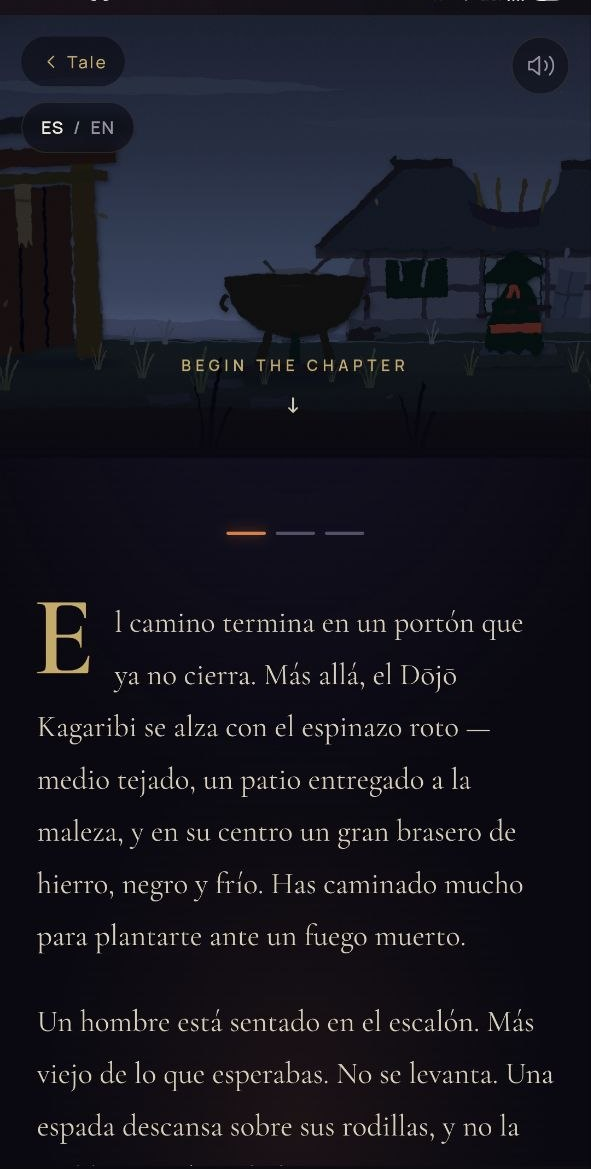
Takeshi’s Tale: a chapter opens 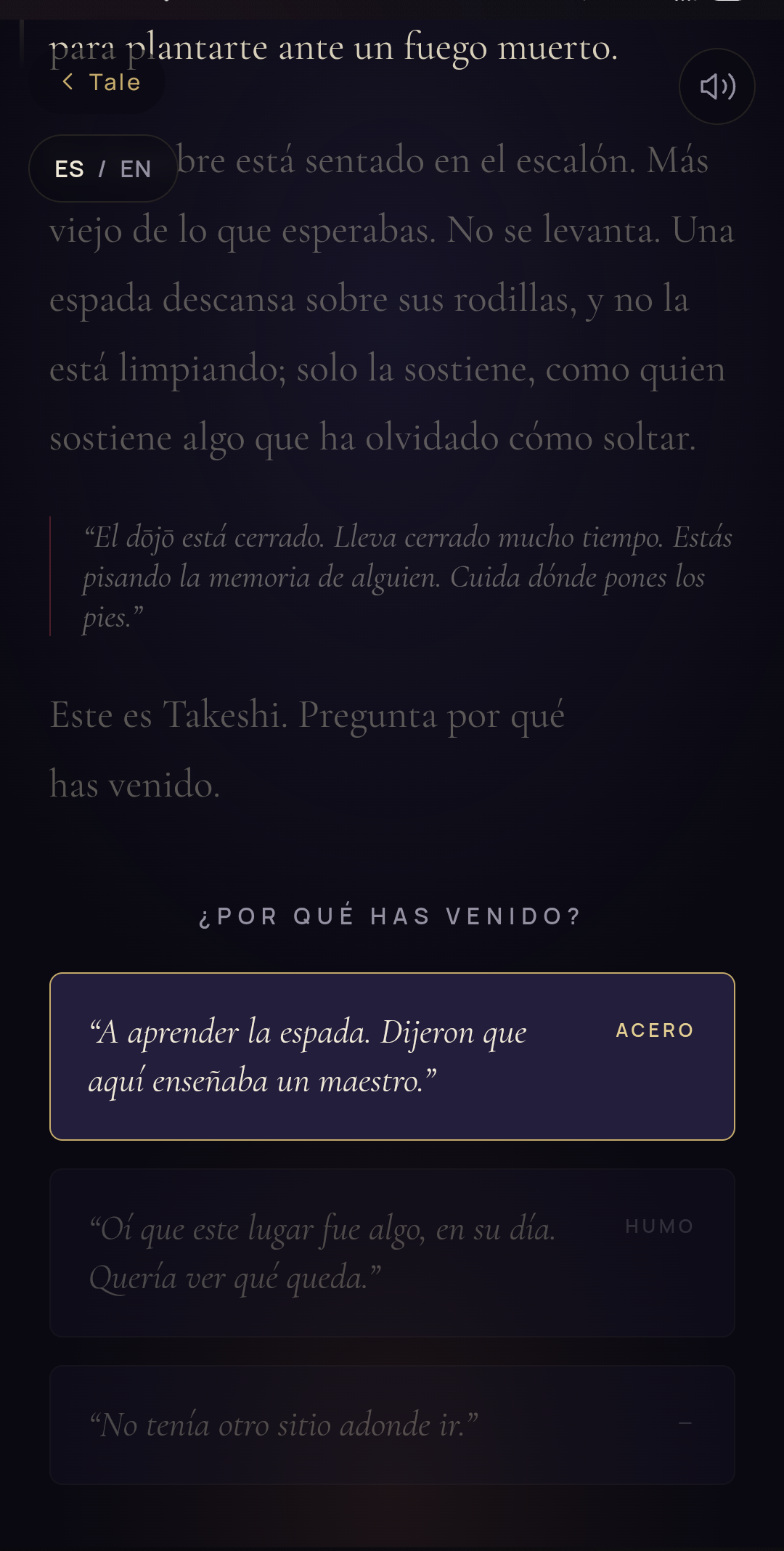
Choosing how Takeshi answers 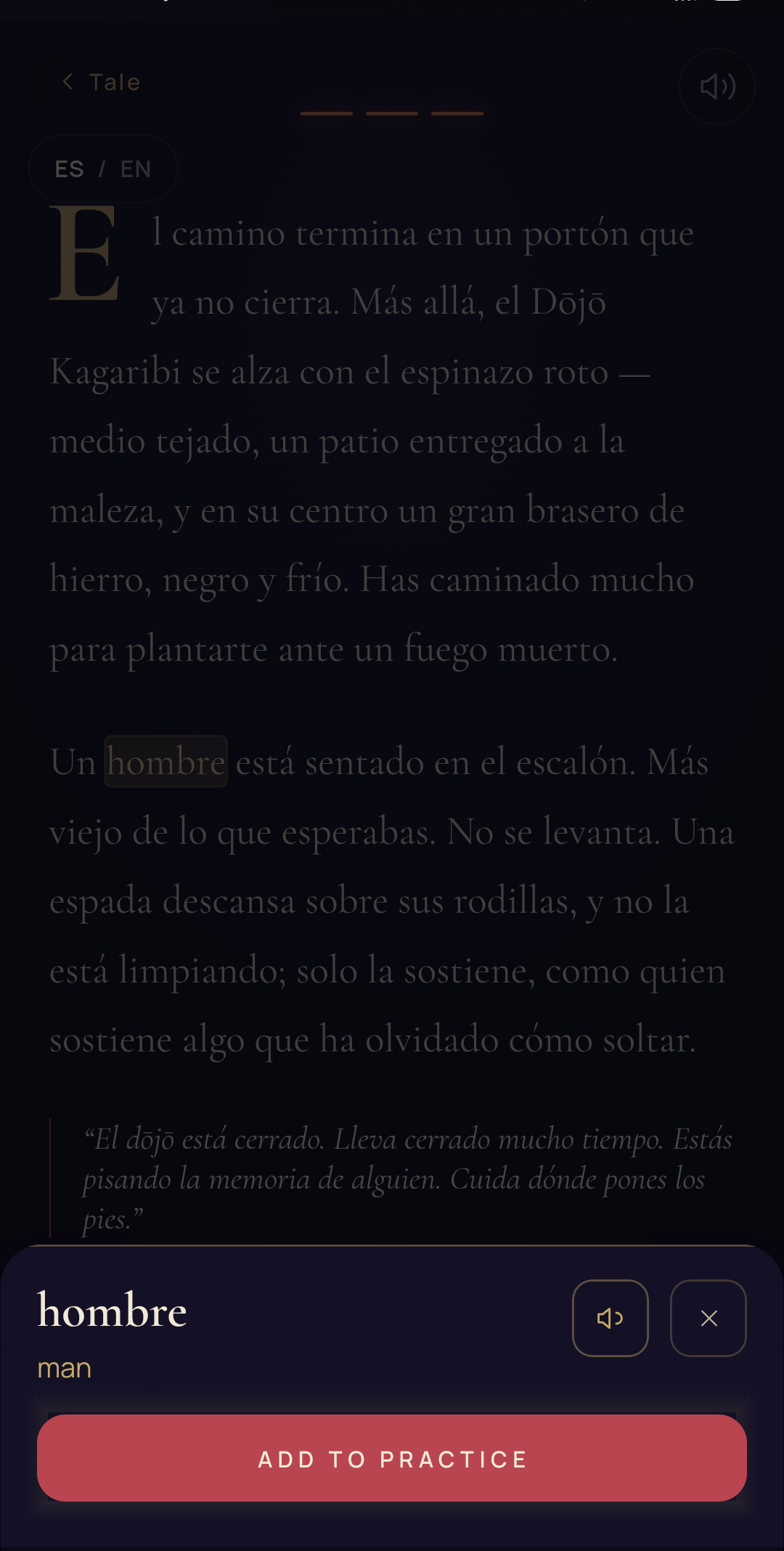
Tap a word, add it to practice 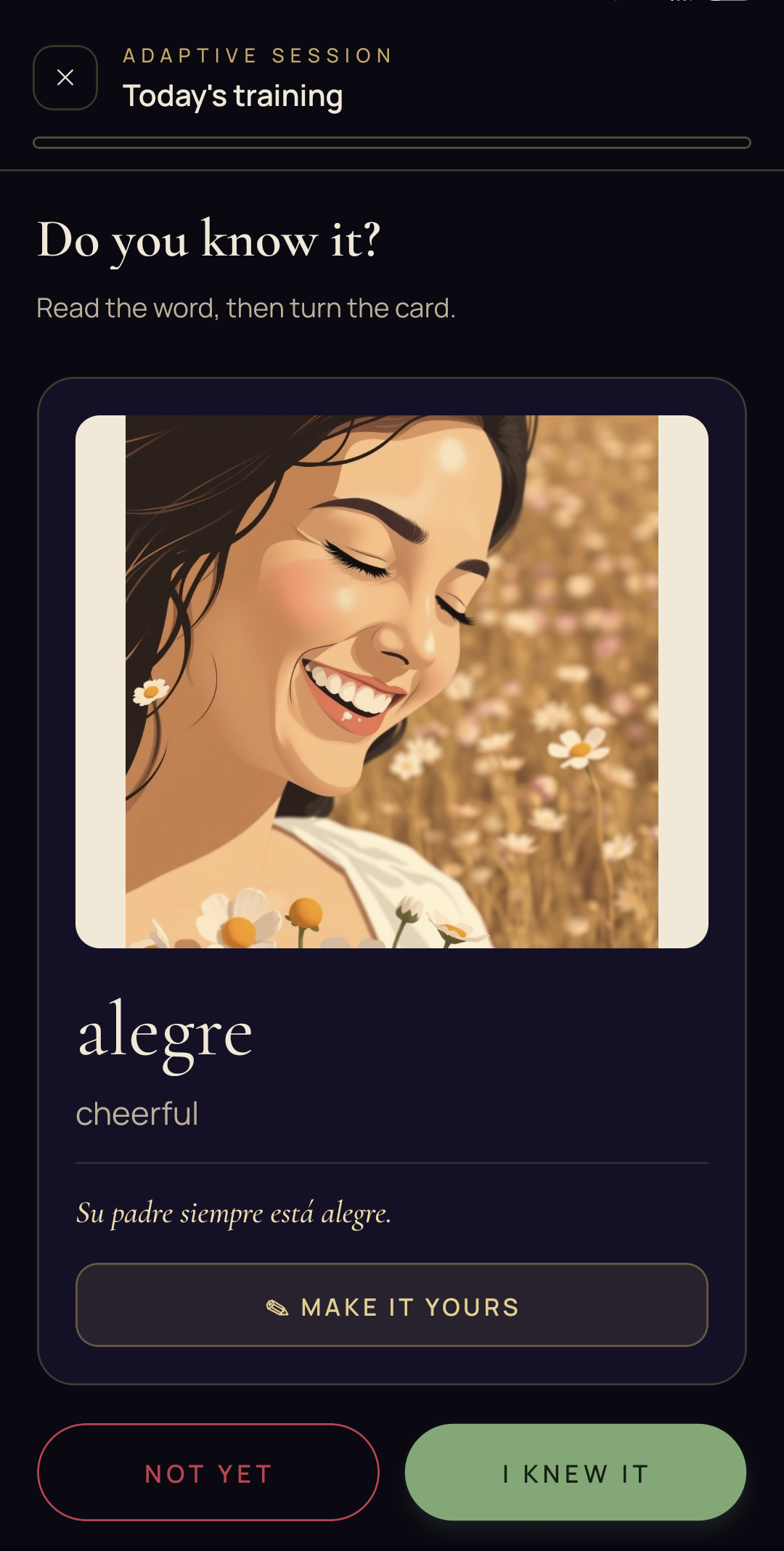
A review card 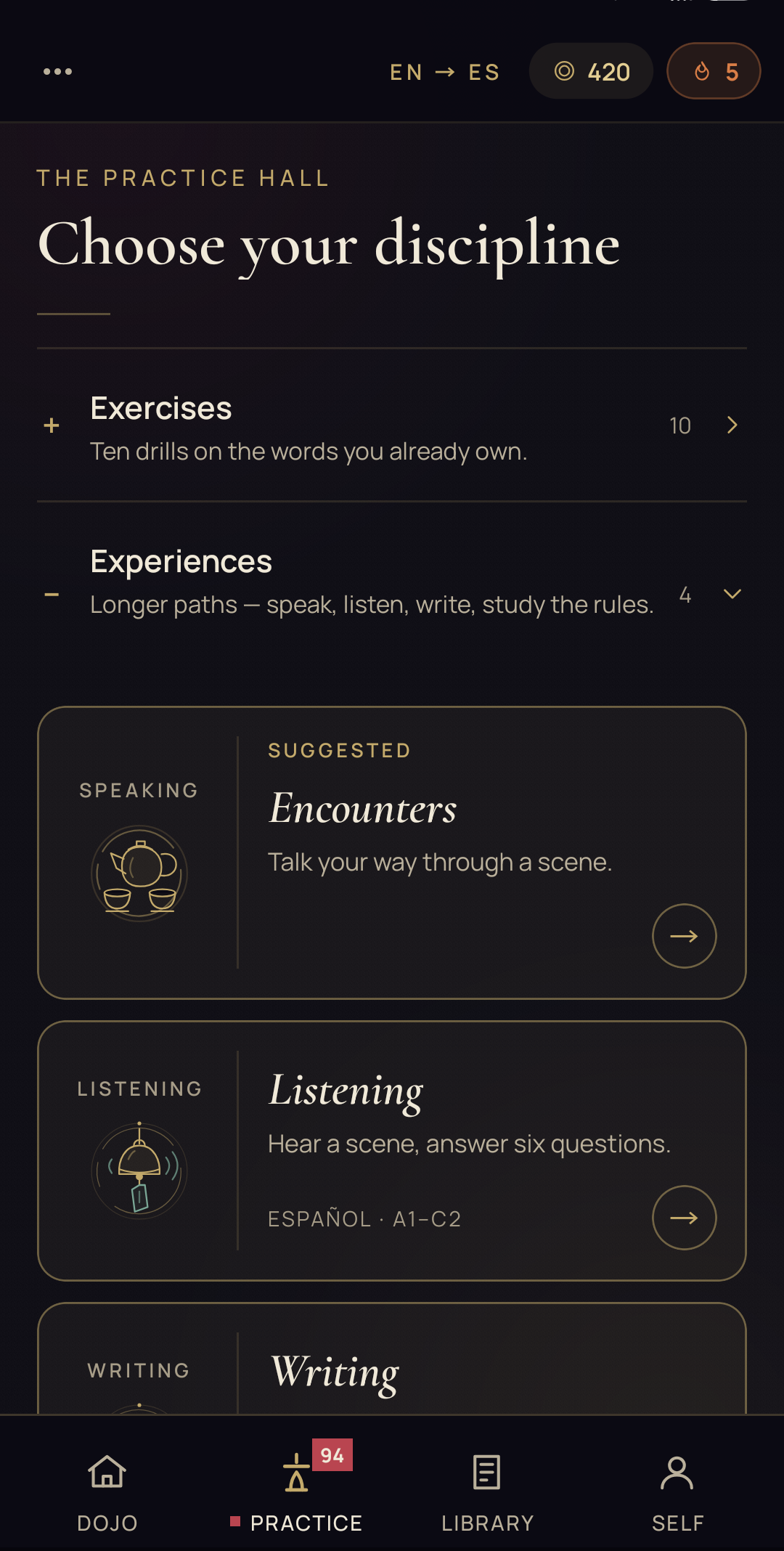
The practice hall 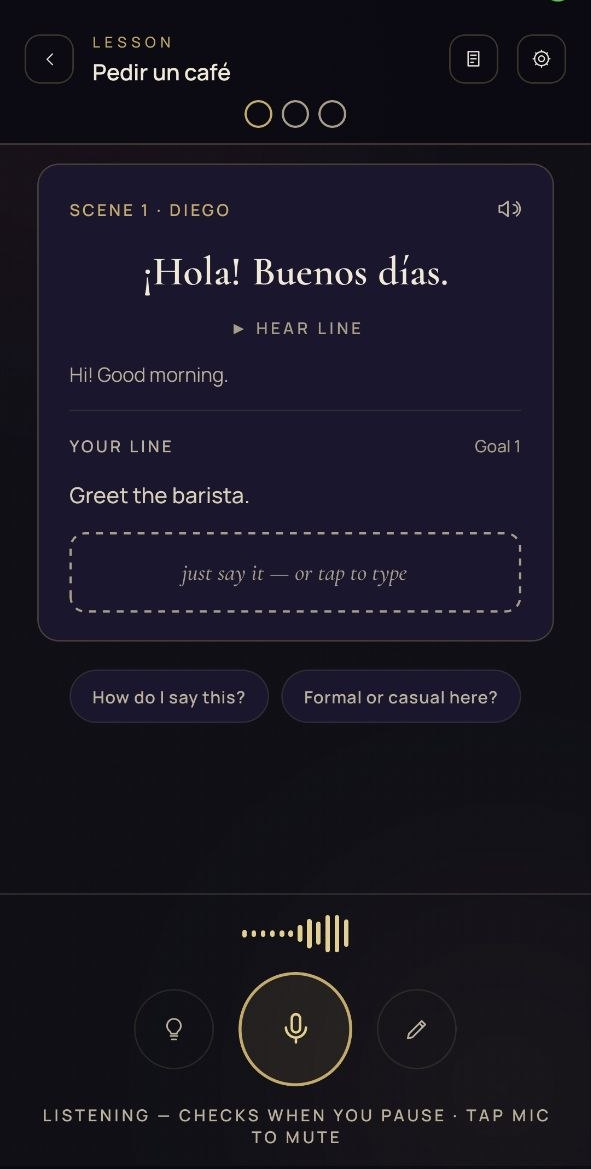
A Speaking Encounter 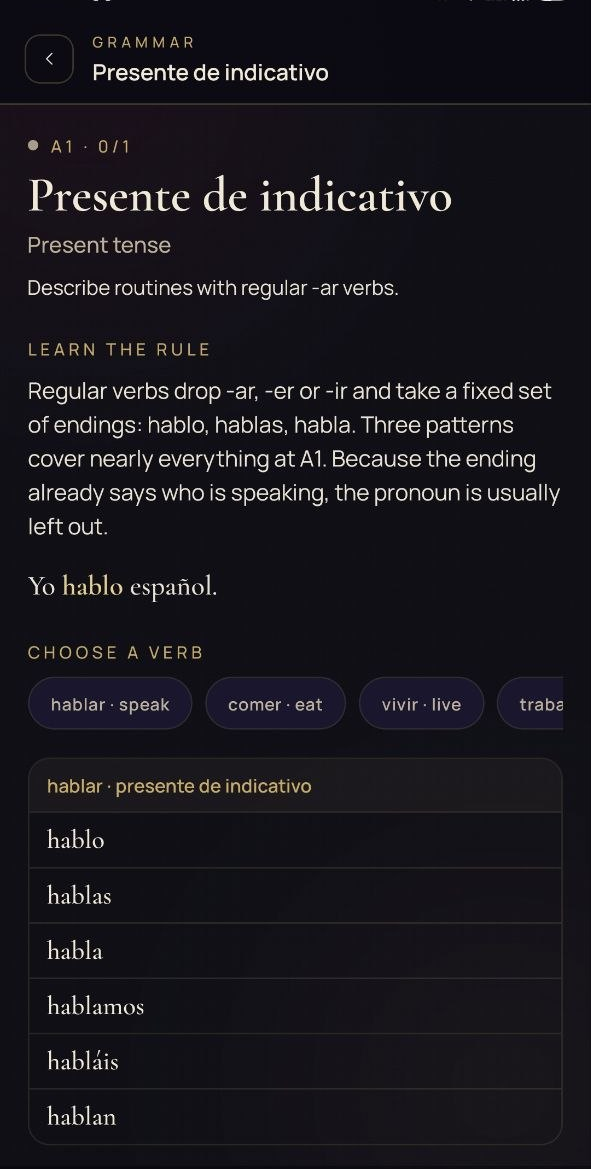
A grammar unit 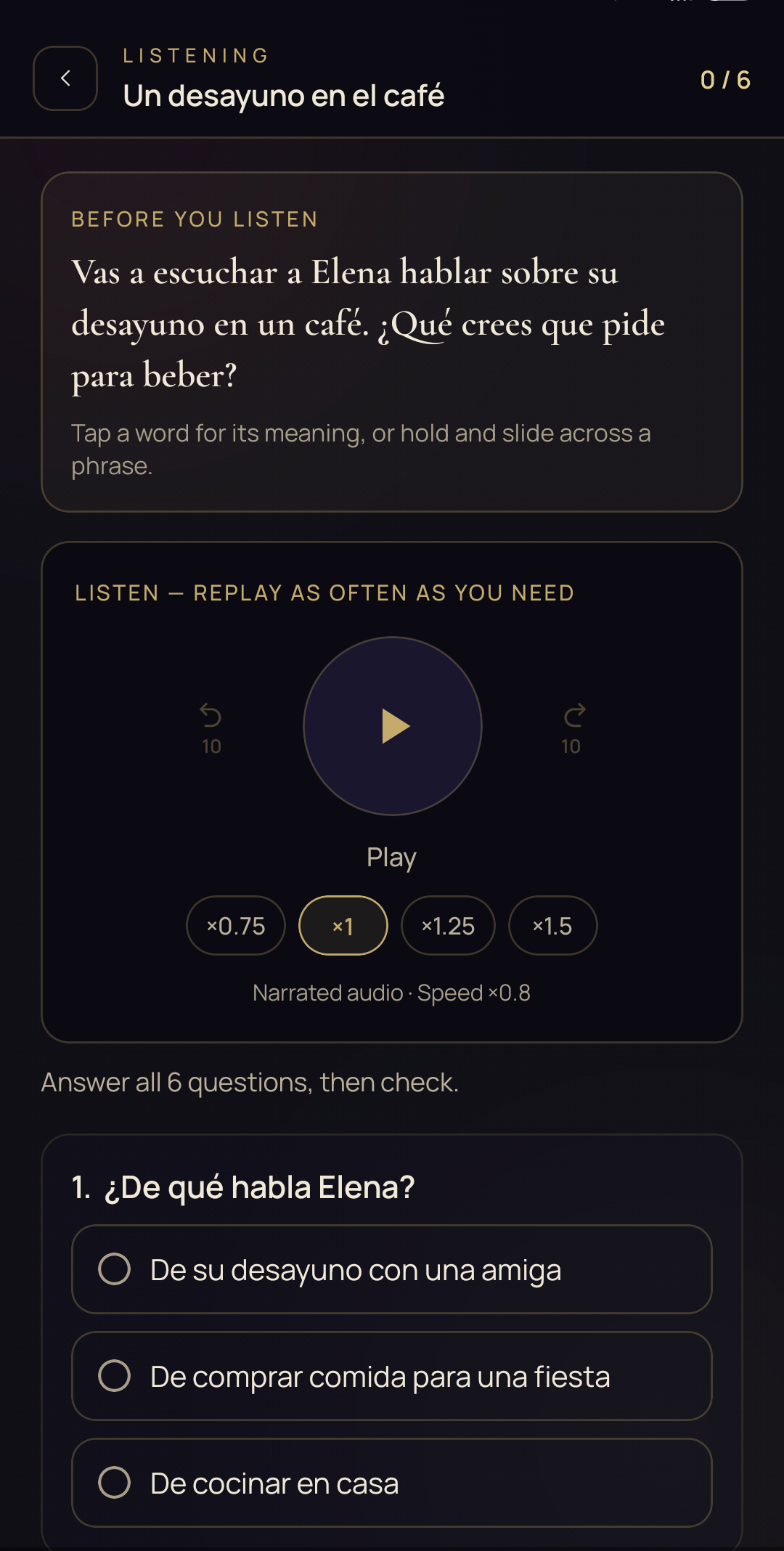
A listening scene 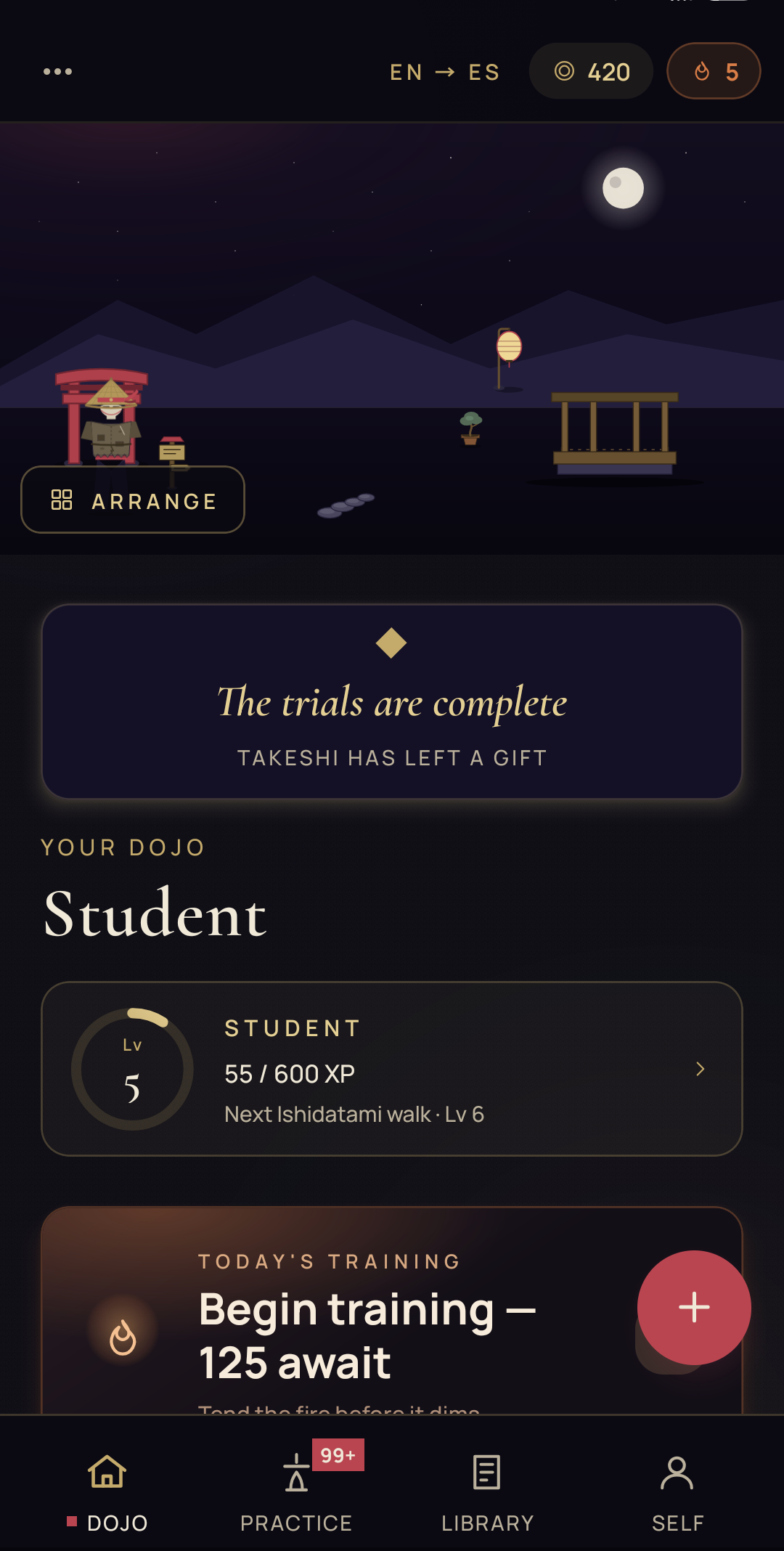
Your dojo grows as you learn 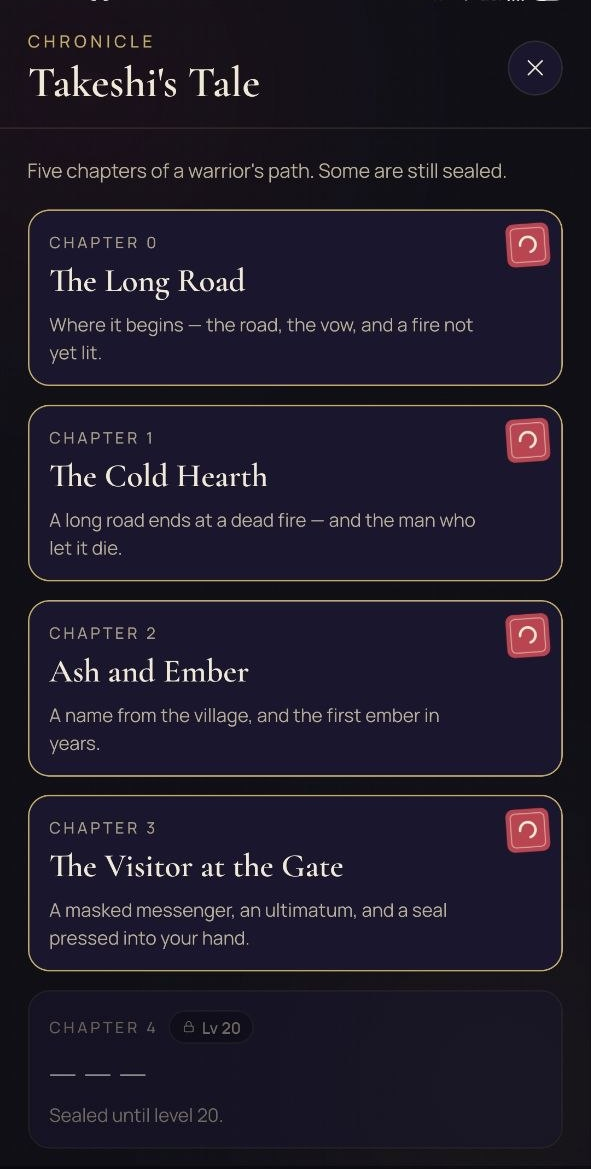
The chapters of the Tale
Video and icon

How the content is made
The word library, grammar units and story content are written with AI assistance and then checked by a validation pipeline with quality gates before they ship. Card illustrations are generated once per concept and shared across every language.
Developer and contact
Kotoba Dōjō is developed by Artsiom Chtrykov, based in Poland.
Artsiom Chtrykov, Founder · press@kotobadojo.com
Press questions, review access and interview requests all go to the address above, and are answered by a person.